An Evening with Dr. Cynthia Watson
Wednesday, June 3, 2020 @ 7:00 p.m. EST
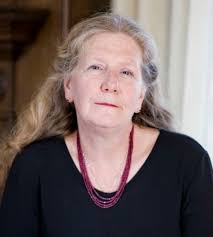
Please Join an FPLC Meeting Event with Cynthia Watson, Ph.D. – Dean of Faculty & Academic Programs at The National War College, The National Defense University
The U.S. and China form what has been called “the determinant relationship of the 21st century.” In this time of upheaval, where is that relationship headed? Are there areas of agreement on issues that affect our country and the world—the economy, trade, and our shared climate? Or are we entering a new Cold War? FPLC is pleased to welcome back Cynthia Watson from the National War College to give us her views on this crucial topic.
Cynthia Watson has served on the faculty of the National War College since she arrived in l992. She accepted the position of Dean of Faculty & Academic Programs in 2014. The mission of the National War College is to educate future leaders of the Armed Forces, Department of State and other civilian agencies for high-level policy command and staff responsibilities by conducting a senior-level course of study in national strategy. When she last spoke to FPLC in 2017, she was focused on military education as an instrument of statecraft as well as China’s modernizing and how that affects its security relations. She has worked on China in Latin America for the past fifteen years. Her most recent manuscript was Asia First: Reflecting or Refracting Strategy? It is an assessment of the use of strategy to achieve the rebalance to Asia and the future of the United States around the world.
She grew up in Thailand and Colombia, earned her M.A. in Economic History/Latin American Studies from the London School of Economics and has a PhD in Government & International Studies from the University of Notre Dame. Her Alma Mater, the University of Missouri at Kansas City, honored her as Alumna of the Year in 2011. She has published nine books on various security issues, including Combatant Commands: Origins, Structure and Engagements (2011), Stability, Security, Reconstruction and Transition Operations (2012), and Military Education (2007).
She was Assistant Dean for Social Sciences at Loyola University of Chicago where she also taught Political Science. Dr. Watson worked for the House Subcommittee on Government Information and Individual Rights as well as the U.S. General Accounting Office. Among other posts she is a member of the National Committee on U.S.-China Relations and the International Institute for Strategic Studies.
Event Sponsored by:


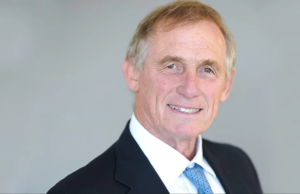 Mr. Rupert Scofield co-founded FINCA International — the founder and majority owner of a global network of 20 microfinance institutions and banks on five continents — in 1984 and has served as President/CEO since 1994.
 While China is a member of the WTO, at the same time it has developed and pursued its own competing model of globalization, which not only competes with the Bretton-Woods model but is often in violation of the rules governing its membership in the WTO. The best example of the Chinese model of globalization is The Belt and Road Initiative – a long-term plan for regional interconnectivity and dominance in Asia to which China has committed some $8 trillion dollars. Both the WTO and The Belt and Road are facing significant challenges. This session will lay out in broad terms the two Globalizations allowing us to discuss this clash of globalizations and the implications for US foreign and trade policy.