The Challenges of International Cultural Preservation

Rebuilding Notre Dame
Presented by Professor Elizabeth Riorden

Tuesday, June 18th, 2019
5:30 Reception/6:15 Dinner/7:00 p.m. Presentation

Schiff Conference Center
Cintas Center at Xavier University

The FPLC invites you and your guests to a stellar presentation about the preservation of global cultural treasures, using the tragic fire of Notre Dame as a focus. Professor Elizabeth Riorden will offer a compelling insider view of how to preserve the world’s great cultural treasures.

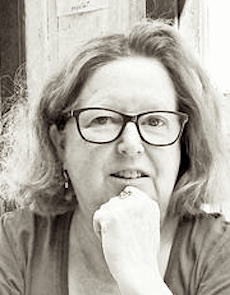
Elizabeth Riorden earned her Master of Architecture degree from Columbia in 1981. After working as an architectural designer and registered architect, she returned to an earlier career interest: archaeology. With B.A. degree from Brown in Ancient and Medieval Culture (magna cum laude 1978), Riorden had a deep interest in the built environment of past civilizations. In 1989 she participated in excavations at Troy in Northwest Turkey. Her Troy drawings and articles appear in Studia Troica. In 2002 she became a full-time academic, teaching architectural design, history and preservation at the University of Cincinnati’s School of Architecture and Interior Design.

Riorden is a Fellow of the American Academy of Rome where her Fellowship project was a study of roof interventions in sensitive archaeological sites. For decades she pursued field work at the medieval site of Psalmodi in the Rhône delta of France, bringing her students to the ruined monastic site for training in advanced architectural documentation and analysis. In 2017 at the annual meeting of the European Association of Archaeologists in Maastricht, she presented Early Gothic in the Midi; the Benedictine Abbey of Psalmodi.” She will share how we can safeguard the world’s architectural treasures.

Event sponsored by:

Xavier University - Edward B. Brueggeman Center for Dialogue

World Affairs Council

U.S. Image Abroad: The Ongoing Case for the U.S. Peace Corps

An evening with Steve Driehaus
Wednesday, April 17, 2019

5:30-7 p.m. – Reception & Dinner
7:00-8:30 p.m. – Presentation and Discussion

Schiff Conference Center
Cintas Center at Xavier University

Steve Driehaus is a former Member of Congress and four term State Representative from Cincinnati. In addition to serving as a Peace Corps Volunteer in Senegal ’88-‘90, he spent six years as Country Director for Peace Corps in Swaziland and Morocco from 2011-2017.
Steve is currently the Executive Director of Cincinnati Compass, Cincinnati’s welcoming initiative for immigrants, and the Managing Partner of the Good Government Group.

Established in 1961, the Peace Corps has sent over 230,000 Volunteers to 141 countries around the world. There are currently 7,376 volunteers and trainees serving in 65 countries. While the foreign policy direction of the United States changes with each administration, Peace Corps remains a constant and integral presence in developing countries across the globe. Steve will discuss the relevance of the Peace Corps, 58 years in, and its ongoing contribution to US foreign policy.

Event Sponsored by:

World Affairs Council

International Cybersecurity

International Cybersecurity:
The Depth and Breadth of the Challenge

An evening with Gene Price, Attorney/Rear Admiral

Thursday, December 13, 2018
5:30-6:15 p.m. – Reception 6:15 p.m. Dinner
7:00-8:30 p.m. – Presentation and Discussion

Schiff Conference Center, Cintas Center at Xavier University

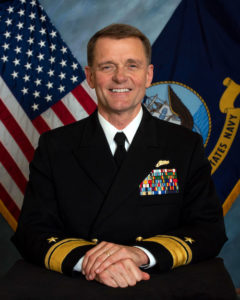
Gene PriceGene Price is an attorney with Frost Brown Todd and serves as a Rear Admiral in the U.S. Navy Reserve. He recently was assigned as Deputy Commander of the U.S. Tenth Fleet and Fleet Cyber Command.

He has experience involving multiple cybersecurity issues, and has supported the Navy, U.S. Cyber Command, and the Department of Defense in his career. Among other areas in private practice he counsels businesses and insurers on cybersecurity.

There are daily news reports of cyber breaches, but the problem’s scope and scale are poorly understood. Many wonder why cyber-criminals aren’t brought to justice or why the U.S. has been repeatedly victimized by other nations. Gene will address the complex world of international cyber-security in terms we can all appreciate.

Event sponsored by:

Iran versus Saudi Arabia

Ancient religious divide – Modern fight for power
An evening with
Ambassador Kenton Keith

Tuesday, February 13, 2018
5:30-6:15 p.m. – Reception 6:15 p.m. Dinner
7:00-8:30 p.m. – Presentation and Discussion

Schiff Conference Center, Cintas Center at Xavier University

Today’s burgeoning proxy conflicts in the Middle East between forces loyal to Sunni Saudi Arabia and Shia Iran are rooted in irreconcilable religious differences between the two main schools of Islam. Rarely have the two powers been as close to open conflict as they are today. Iran’s regional influence is increasing as Shia allies in Iraq, Syria, Lebanon and elsewhere appear to be gaining influence. Saudi Arabia’s succession drama is playing out in ways that few would have predicted only a couple of years ago. The Kingdom is involved in a conflict in Yemen that pits Sunni against Shia. Both Saudi Arabia and Iran are in existential conflict with ISIS, which is largely Sunni.

Each has oil and gas resources, but each has domestic economic and political challenges that have distanced the leadership from their populations. U.S. interests are tied to maintaining stability in the Middle East, progress toward Mideast peace between Israel and the Arab world, and unimpeded access to oil and gas. All those interests are affected by the dynamics of Saudi-Iranian competition.

Kenton KeithKenton Keith retired from government service in 1997 after four years as a naval officer and thirty-two in the U.S. Information Agency and Department of State. His final years at USIA included assignments in Brazil, Paris, and Cairo in public affairs and cultural affairs in deputy and senior positions. In Washington, he served as both Deputy Area Director and Area Director for USIA’s (NEA) North Africa, Near Eastern and South Asian Affairs. Keith led the USIA planning team for the amalgamation of foreign affairs agencies. He was confirmed as Chief of Mission Doha, Qatar in 1992. For five years he served as a team leader in the Department’s Office of the Inspector General, before being named US Ambassador to Qatar in l992 for three years.

As Ambassador to Qatar he oversaw U.S. cooperation with American private sector companies competing for a share in the rapid expansion of Qatar’s LNG development, related technologies, as well as traditional petroleum exploration and development. He participated in successful negotiations with the Qatari government on regional security cooperation including the pre-positioning of U.S. military equipment and had an active role in Qatar’s establishment of American university faculties in the country.

Post Foreign Service Keith was Senior Vice President of Meridian International Center, the largest program agency assisting the Department of State in the management of the International Visitor Leadership Program. After retirement from Meridian, Ambassador Keith returned to State for occasional stints as Team Leader for Office of Inspector General teams. He led inspections of embassies in Luxembourg, The Hague, Reykjavik, Madrid, Lisbon and Brasilia, as well as the board of the Broadcasting Board of Governors.

Keith serves on the boards of the conflict resolution organization Partners Global, the Association of Diplomatic Service and Training, the Washington Humane Society, and the anti-human trafficking organization Artworks for Freedom. He belongs to the American Academy of Diplomacy, the citizen diplomacy organization Global Ties U.S., Meridian’s Hospitality and Information Service, and DACOR, and organization for retired diplomatic and consular officers.

Ambassador Keith is a Chevalier in the French Order of Arts and Letters. He is a member of the Cosmos Club of Washington, DC.

Event sponsored by:

Xavier University - Edward B. Brueggeman Center for Dialogue

World Affairs Council