
An evening with Rupert Scofield
Co-Founder and CEO of FINCA INT’L
Schiff Conference Center/Cintas – Xavier University
Thursday, February 27
5:30 reception/6:15 dinner/7:00 talk/discussion
 Mr. Rupert Scofield co-founded FINCA International — the founder and majority owner of a global network of 20 microfinance institutions and banks on five continents — in 1984 and has served as President/CEO since 1994.
Rupert leads FINCA International on the next leg of its journey: supporting the rise of social enterprises delivering basic service and financial innovation. An expert on microfinance, social enterprise and impact investing, Rupert is an author, podcast presenter and frequent speaker, offering insights and guidance on market-based solutions to global poverty.
Rupert Scofield co-founded microfinance pioneer FINCA International (“FINCA”). As FINCA scaled around the world, so too did microfinance. Rupert learned what it took to start, build and run one of the original social enterprises and learned an invaluable lesson: to alleviate poverty takes a network of social enterprises that improve lives worldwide. Rupert will share why social enterprises are needed now more than ever to address the world’s pressing development challenges. He’ll ground this in firsthand experience of not only building and running a global social enterprise, but also becoming an investor in early-stage social enterprises through FINCA Ventures. Rupert will address the network effect of social enterprises and how social enterprise initiatives grew out of his recognition that access to basic services requires financial inclusion and that both are essential to poverty alleviation.
Event sponsored by:


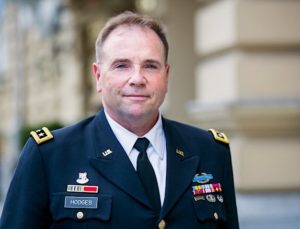 General Ben Hodges was Commander of the United States Army Europe from 2014 to 2017 and Commander of the NATO Allied Command from 2012 to 2014. Stars and Stripes called Hodges’ tenure at USAREUR “the most consequential in Europe since the end of the Cold War.” Ben maintains his residence in Frankfurt, Germany where he serves as the Pershing Chair in Strategic Studies for the Center for European Policy and Analysis, a Washington based think tank.
 Elizabeth Riorden earned her Master of Architecture degree from Columbia in 1981. After working as an architectural designer and registered architect, she returned to an earlier career interest: archaeology. With B.A. degree from Brown in Ancient and Medieval Culture (magna cum laude 1978), Riorden had a deep interest in the built environment of past civilizations. In 1989 she participated in excavations at Troy in Northwest Turkey. Her Troy drawings and articles appear in Studia Troica. In 2002 she became a full-time academic, teaching architectural design, history and preservation at the University of Cincinnati’s School of Architecture and Interior Design.

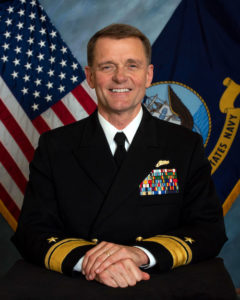 Gene Price is an attorney with Frost Brown Todd and serves as a Rear Admiral in the U.S. Navy Reserve. He recently was assigned as Deputy Commander of the U.S. Tenth Fleet and Fleet Cyber Command.